

Axolotl Care and Information
Axolotls were named after Xolotl, the Aztec god of fire and lightning, who could take on the form of a salamander. Xolot was also associated with dogs, and "atl" is the ancient Aztec word for "water`--so axolotl` is sometimes translated as "water dog."
FACT; Axolotls are Descended from tiger salamander, found in the southernmost edge of the Basin of Mexico.
The take form of a juvenile salamander and are a water based Aquatic animal It is very important to handle axolotls in the water and to not remove them. (axolotl Can not leave the water.)
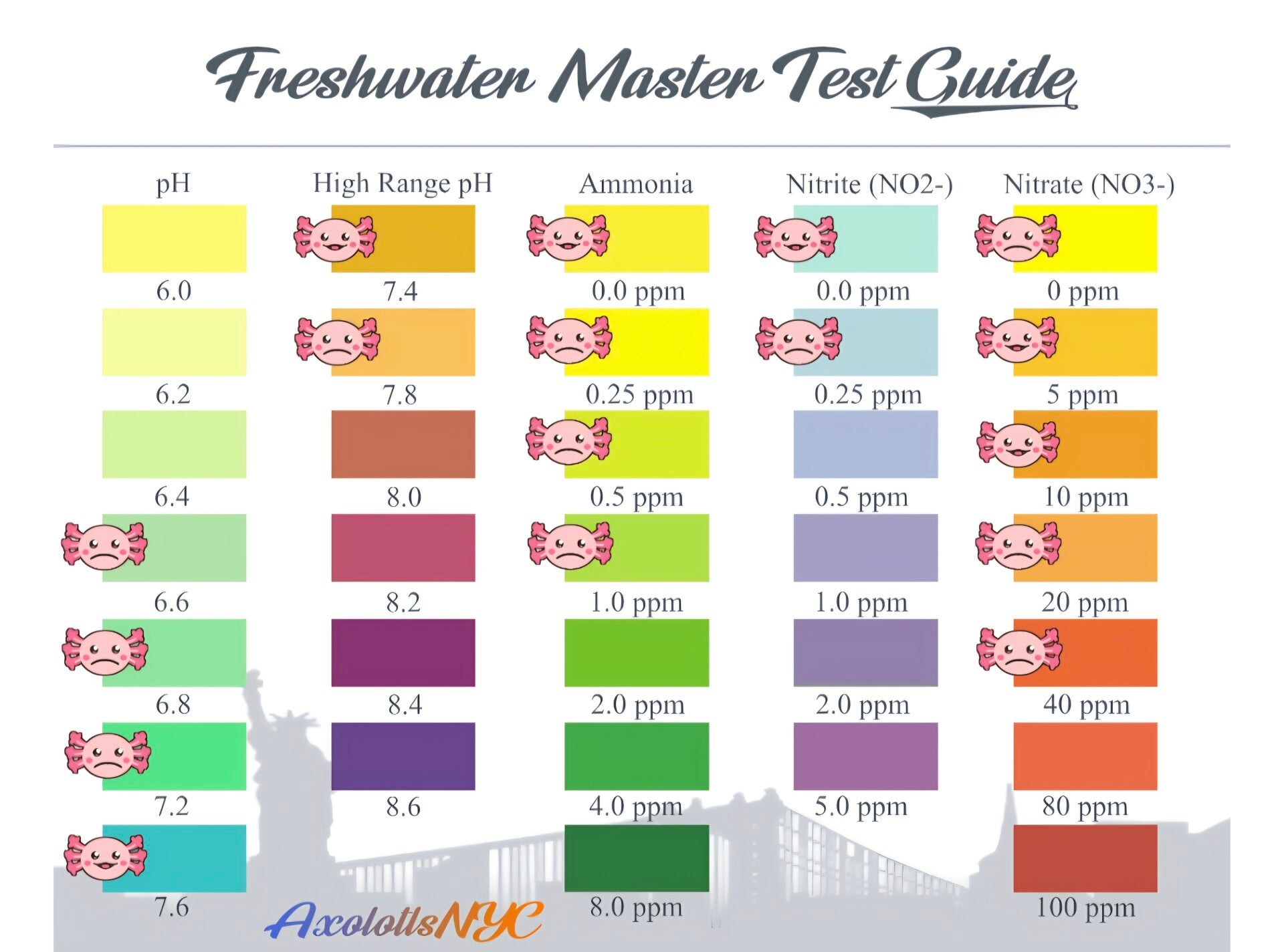
As with all tanks Good quality filtration is required along with regular pH and water checks on a regular basis. Axolotls are also dark dwellers and prefer minimal light, so lighting in not suitable for there set up natural light is good with small amounts. When set up axolotls are a very low maintenance and make great first time Aquatic pets.
FACT: Australia is prone to hot temperature and a chiller is a necessity for axolotl care
Housing and Keeping
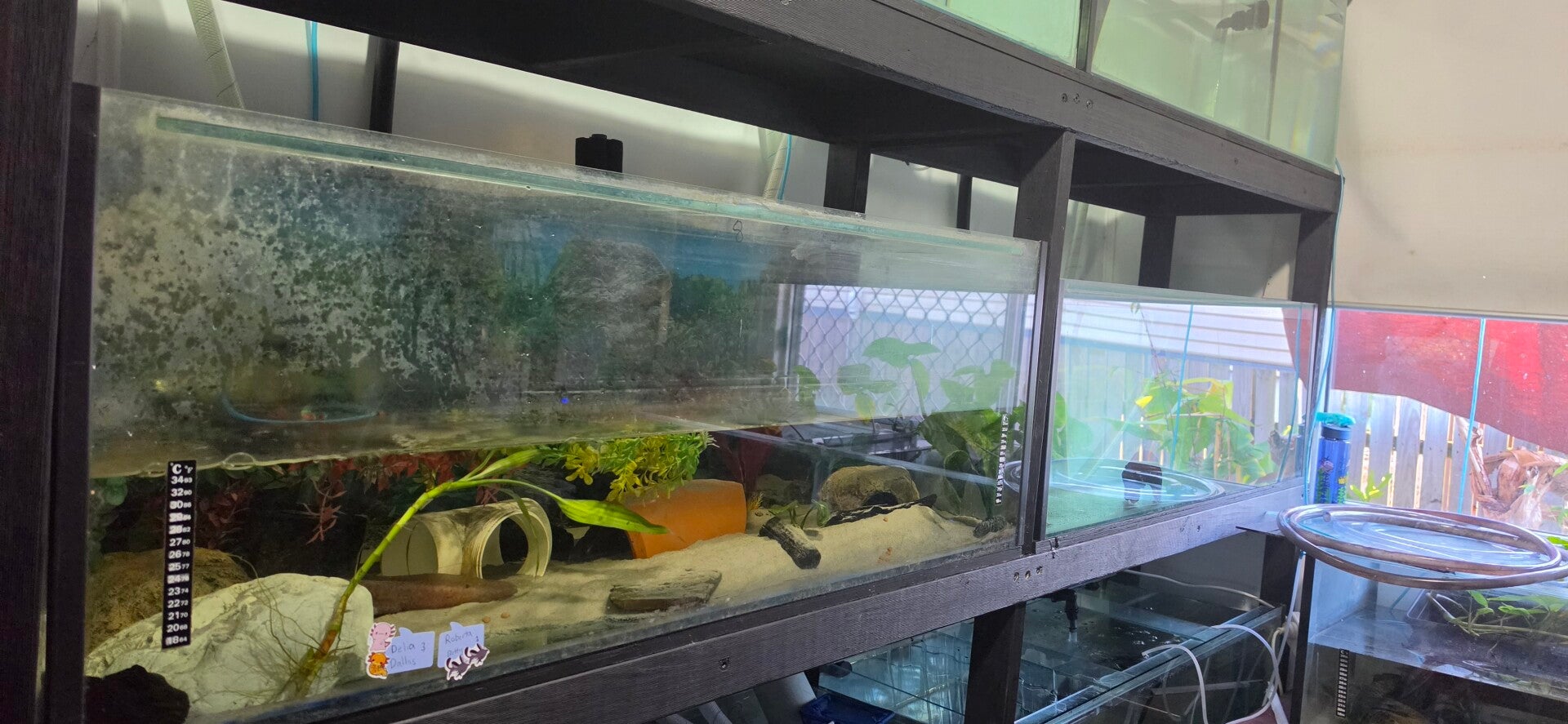
Axolotls need a space of 2 foot / 60cm minimum long per Axolotl. For a pair of axolotls a 3 foot tank is recommended. Smaller tanks or a bowl will cause the axolotl to pace, which can create swim bladder. Left untreated will end up being fatal. Axolotls need to stay at a temperature of 15 to 18 degrees C and the best way to maintain is with a chiller.
Having plants recommended as good resting and hiding places but be advised if you use fake plants make sure they aren't easy ripped as axolotls will try to eat any small pieces. Caves are also recommended for hiding and rest. For substrate (bottom of tank) we recommend sand, large river rock or glass bottom, you can also use tiles or slate as long as it has no heavy metals or leaking color. As having small pebbles can easily be swallowed cause harm.
Temperament and Tank Mates
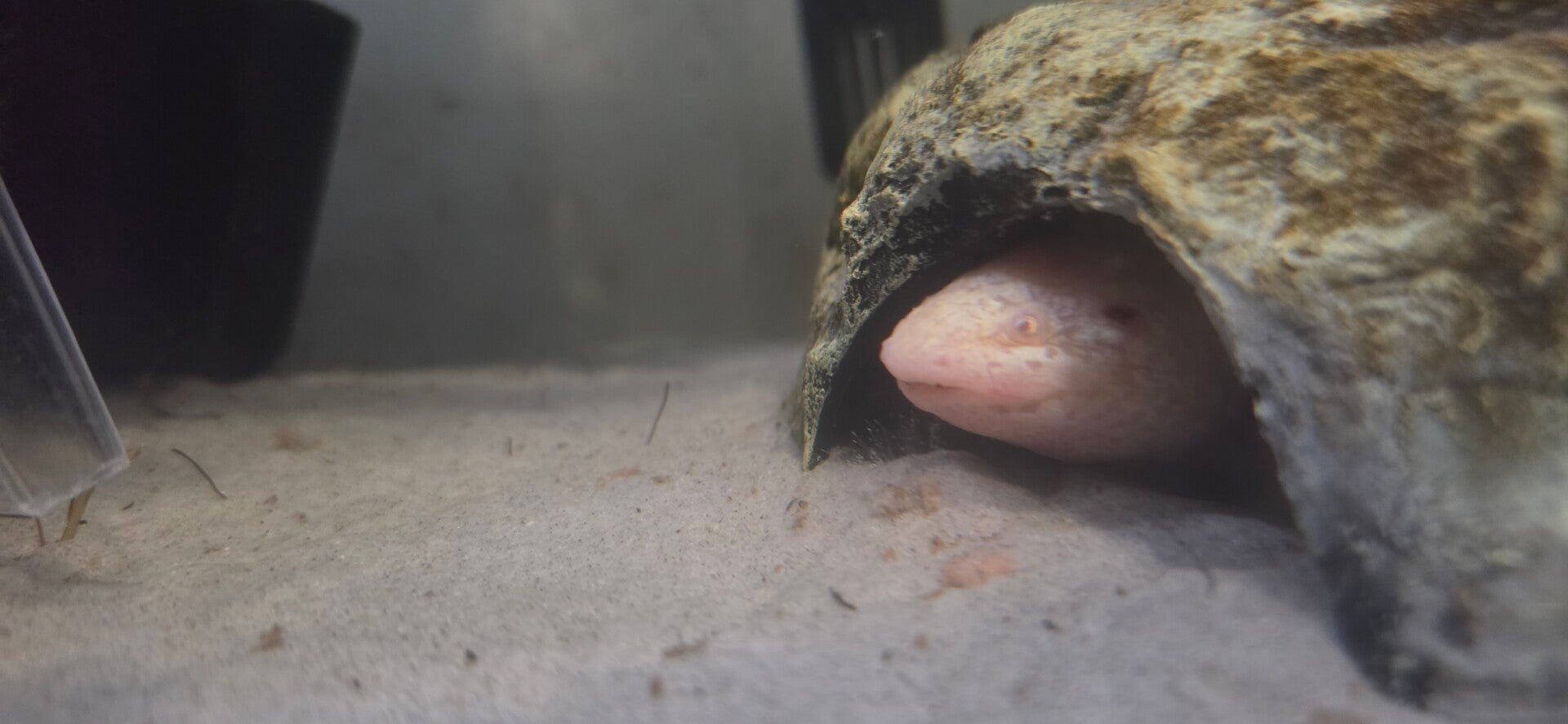
When left alone, axolotls are generally very placid. However, they may mistake their tank mates for food if they are fed too close together. Having a bigger tank gives more space to feed separately and is recommended.
Axolotls may snap at anything within their line of sight, while fish can nip at their delicate gills, potentially causing significant harm. For this reason. it is not recommended to house axolotls with other species. The safest option is to keep them with other axolotls, or on their own, as they are perfectly content living a solitary life,
Feeding
Axolotls need to be feed everyday to every second day. It is recommended to feed high protein sinking axolotl pellets and for a treat you can use blood worms or earth worms. (Earth worms once a week as it's a fatty food source) Any uneater food needs to be removed with in 24 hours or it can contaminate the waters ph and Pneumonia levels. A good way to feed your axolotls is to have a feed platform made from tiles or slate rock.


Heath and Care
If handied too often, stressed or injured, axolotls can suffer from fungal or bacteria infections due to damage of the slim coat which covers there skin. Things you can do help treat this are, tea bath ( regular no added preservatives tea from your local supermarket e.g. bushels tea) and Indian almond leaves. Put leaves or tea in hot water and set aside to cool. Removed tea/leaves and add it to a small container of chilled water. Add axolotl to water for 10 to 15 minutes. Remove axolotl form tea bath back to regular tank.
You can also use Methylene blue in small doses approximately1/4 of recommended dosage that it suggests on the bottle. This can be found on line or at certain pet shops.Water temperature should maintain at a low temperature of 15 to 18 degrees C. This will also help prevent fungal growth within the tank.
FACT: healthy well kept Axolotl can live up to 12 to 15 years but have been reported to live up to 25.
Create Your Own Website With Webador